logo
Home

blog about Understanding Torque Units and Practical Applications

Certification
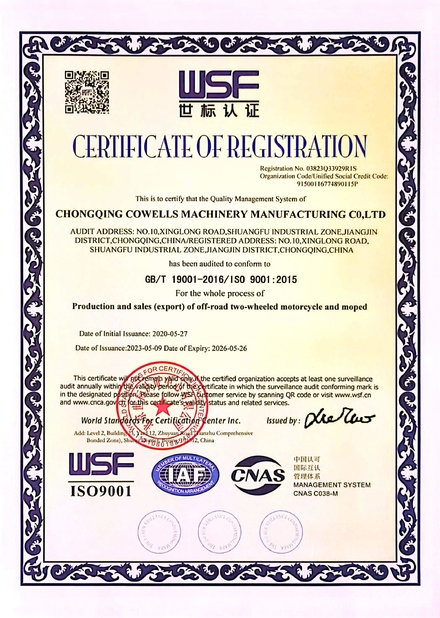
China Chongqing Cowells Machinery Manufacturing Co., Ltd. certification
I'm Online Chat Now
Company Blog
Understanding Torque Units and Practical Applications
Latest company news about Understanding Torque Units and Practical Applications

When tightening bolts, professionals often face a critical question: exactly how much force is needed to achieve optimal results? The answer lies in understanding torque - the rotational force that causes an object to turn. Picture using a wrench of length L while applying force F ; the resulting rotational force T is what we call torque. For example, applying 100 newtons (approximately 10 kilograms of force) on a one-meter wrench generates 100 newton-meters (about 10 kilogram-force meters) of torque.

The Evolution of Torque Measurement

The units for measuring torque have undergone significant standardization. Historically measured in kilogram-force meters (kgf·m), the international scientific community transitioned to newton-meters (N·m) as part of the SI unit system adoption. This change, mandated by China's 1993 "New Metrology Law" to align with global standards, replaced kilogram-force with newtons (N) as the primary force measurement.

Conversion note: 1 newton-meter ≈ 0.10197 kilogram-force meters, while 1 kilogram-force meter ≈ 9.8067 newton-meters. For practical estimation, professionals often approximate 1 kilogram-force meter as 10 newton-meters.

Practical Applications in Industry

Understanding torque unit conversion becomes particularly crucial when using specialized tools like torque wrenches, which typically display both measurement systems. Whether in automotive repair, mechanical assembly, or any precision fastening application, proper torque knowledge prevents two common failures: insufficient torque risking loose connections, and excessive torque potentially damaging bolts or components.

Industry experts emphasize consulting technical manuals or qualified professionals to determine application-specific torque values. Proper torque control enhances both operational efficiency and equipment safety, preventing costly failures. This fundamental mechanical concept remains an essential skill across technical professions, from aerospace engineering to everyday appliance maintenance.

Pub Time : 2026-09-25 00:00:00 >> Blog list
Contact Details
Chongqing Cowells Machinery Manufacturing Co., Ltd.

Contact Person: Mr. EDISON

Tel: +8618523336234

Fax: 86-023-85552965

Send your inquiry directly to us (0 / 3000)